
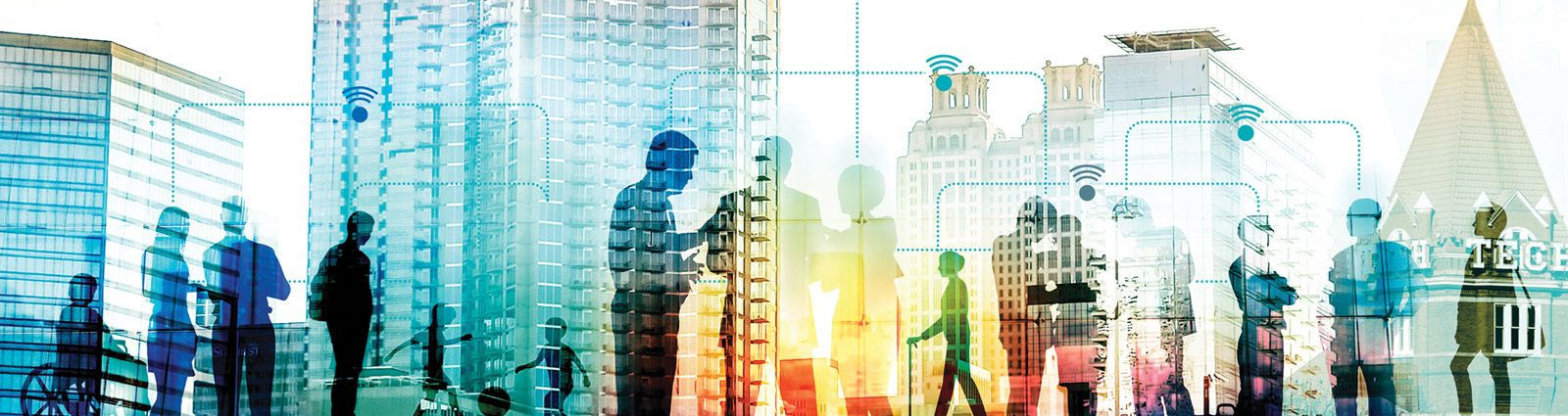
Georgia Tech’s focus on Smart Cities develops innovative approaches to shaping resilient and sustainable communities. Through research and development, strategic partnerships, and cutting-edge programming we bring Georgia Tech's interdisciplinary expertise in technology and policy to the development of smart cities and communities.
Mission
About Us
Located in Tech Square and in partnership with local governments, industry and communities, we develop cutting-edge approaches to shaping resilient and sustainable communities through a suite of applicable technology and data applications. IPaT is university-wide and intentionally works across Georgia Tech’s schools, colleges, and research units to foster multidisciplinary research and teaching for community impact.
What is Smart Cities?
All communities can be smart. They do not have to be restricted by population, location or median income. “Smart” is a process of continuous improvement and integration of people, data, partnerships, and suitable technologies. Establishing a smart community requires voices from all walks of life in order to fully understand the needs of the community.
IPaT believes multi-disciplinary, applied research is at the heart of building a great community. Communities should be empowered in understanding and applying the most innovative and suitable research to address their complex problems.
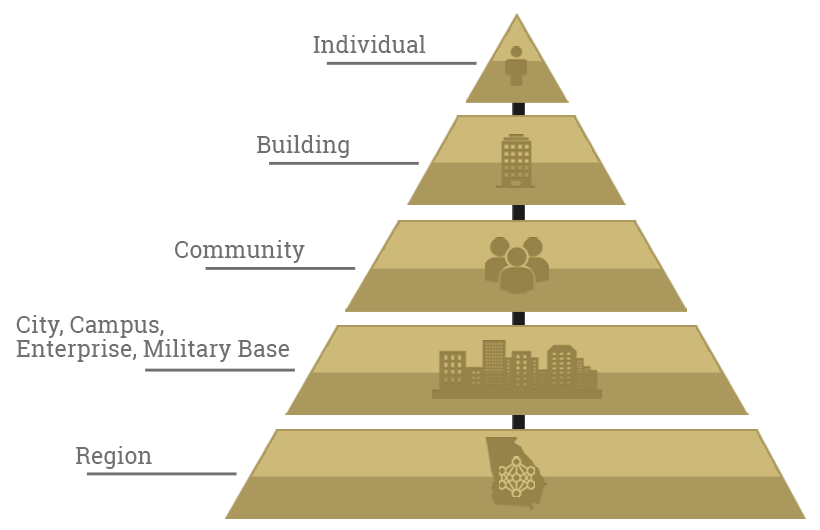
We facilitate the partnerships between researchers, communities and industries to promote private/public collaboration. As a result, communities have access to the research and teaching and researchers can ground truth to their work through real world input. This also enhances education and training for students, so they are equipped with leading and supporting smart development projects.
A smart city utilizes data that are central to the connected community. A smart process relies on knowing what data you have, what data you need, and how to connect the right people to the right data. It also understands the limitations and biases that data can bring, and seeks to improve data literacy and application. Finally, it looks at the importance of data security and privacy that is localized to the particular context and conditions.
Research Centers

Brook Byers Institute for Sustainable Systems
The Brook Byers Institute for Sustainable Systems holistically integrates the disciplines of science, engineering, social science, policy, planning, design and business to create knowledge and technologies that will improve environmental, social, and economic outcomes.
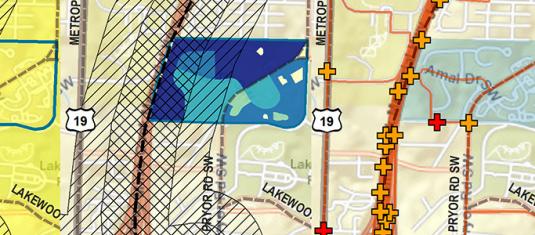
Center for Quality Growth and Regional Development
The Center for Quality Growth and Regional Development (CQGRD) is dedicated to the study, dissemination, and implementation of ideas and technology that improve the theory and practice of quality growth.
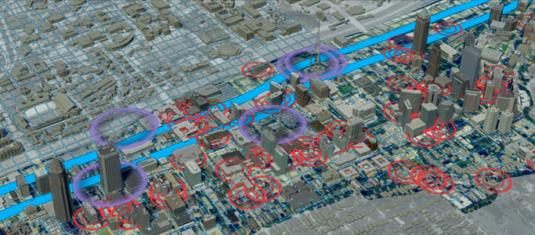
Center for Spatial Planning and Analytics and Visualization
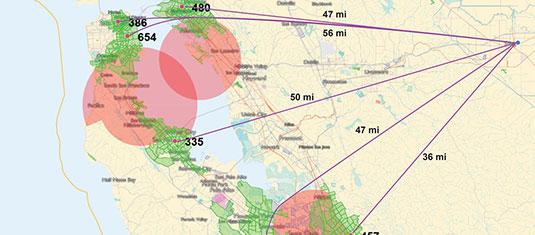
The Center for Spatial Planning and Analytics and Visualization develops and applies geospatial technologies for planning, maintaining, and evaluating crucial infrastructure for sustainable, or long lasting, urban growth.

Center for Transportation Research
Georgia Tech's School of Civil and Environmental Engineering (CEE) is committed to engineering fundamentals, state-of-the-art technology, hands-on instruction, and interdisciplinary research to solve problems that are critical to quality of life. Welcome to the Georgia Tech Center for Transportation Research.
Center for Urban and Regional Air Mobility
The Center for Urban and Regional Air Mobility (CURAM) is an interdisciplinary center that integrates existing capabilities and strengths of the faculty, students, and facilities from multiple schools, colleges, and research centers across Georgia Tech and the Georgia Tech Research Institute (GTRI).
Climate and Energy Policy Laboratory
The Climate and Energy Policy Laboratory (CEPL) conducts research on clean energy financing, information and regulatory policies; energy policy and technology trends in the U.S. South; transformation to a smart grid; and the evolution of distributed resources including energy
efficiency, demand response, and solar photovoltaics.
Georgia Tech Research Institute
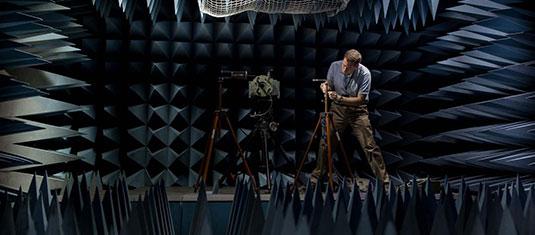
The Georgia Tech Research Institute (GTRI) is the nonprofit, applied research division of the Georgia Institute of Technology (Georgia Tech). Founded in 1934 as the Engineering Experiment Station, GTRI has grown to more than 2,000 employees supporting eight laboratories in over 20 locations around the country, and performs more than $350 million of problem-solving research annually for government and industry.
Global Change Program
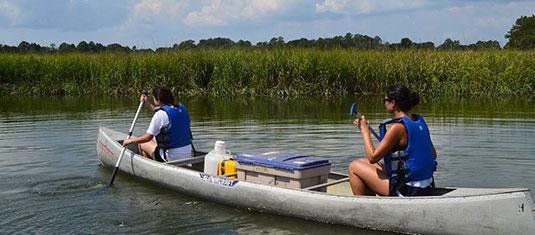
The Global Change Program seeks to train a new generation of leaders who are equipped to pursue solutions to a host of interconnected challenges such as climate change, environmental pollution, water resources, human health, and the rising demand for affordable, clean energy.

Institute for Data Engineering and Science
The Institute for Data Engineering and Science (IDEaS) provides a unified point to connect government, industry, and academia to advance foundational research, and accelerate the adoption of Big Data technology.
Institute for People and Technology
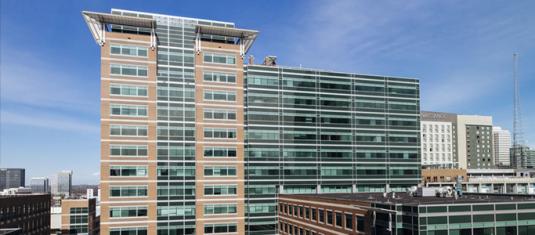
The Institute for People and Technology (IPaT) is shaping the future of human-centered systems, environments and technologies to promote satisfying, healthy and productive
lives.

Institute for Robotics and Intelligent Machines
Georgia Tech's Institute for Robotics and Intelligent Machines (IRIM) serves as an umbrella under which robotics researchers, educators, and students from across campus can come together to advance the many high powered and diverse robotics activities at Georgia Tech.
Ray C. Anderson Center for Sustainable Business
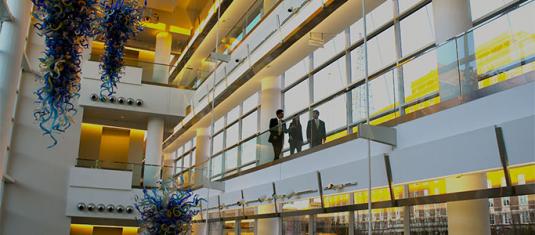
The Ray C. Anderson Center for Sustainable Business acts as a catalyst and connector, bringing together students, research faculty, companies, and entrepreneurs to create an environment where business-driven solutions to sustainability challenges can take shape and thrive.

Strategic Energy Institute
The Strategic Energy Institute (SEI) develops technologies, policies, and educational programs that have the potential for offering high-impact solutions to pressing near-term energy issues. SEI engages in fundamental energy-related research that will have a long-term, transformative effect on our nation's energy future.

Supply Chain & Logistics Institute
The Supply Chain & Logistics Institute (SCL) enables supply chain professionals, businesses and governments to transform complex supply chains and trade corridors to improve logistics performance by providing education, innovation and solutions for global and domestic supply chains.